
Good packing is the difference between a move that ends on time and one that ends with a broken serving dish and a TV nobody can plug back in. We have carried boxes up three-flat walk-ups in Avondale, waited on slow freight elevators downtown, and threaded furniture down narrow Bungalow Belt alleys. The way you pack changes how all of that goes.
These are the same packing tips we share with our own customers before move day. They are simple, they are Chicago-specific, and they will save your back, your dishes, and your time. Pack with a little care up front and the rest of the day takes care of itself.
Key Takeaways
- Box by room and label every box on the side (not the top) with the room and a quick note on contents — it speeds up the crew at the destination and keeps your fragiles where you can see them.
- Use small boxes for heavy stuff (books, dishes, records) and large boxes for light bulky stuff (linens, pillows) — a box no one can lift slows the whole move and risks a blowout on the stairs.
- Pack a walk-up the smart way: keep aisles and the staircase clear, stage finished boxes near the door, and never stack them on the landing where the crew needs to turn.
- Plan around Chicago realities — book the freight elevator and order your COI early, account for alley access and permit-zone parking, and don't leave loose items rolling around for the truck.
- Have an essentials box and your valuables (documents, jewelry, meds, chargers) set aside to ride with you, not on the truck, so your first night is covered.
Wrap glassware in packing paper, never newspaper
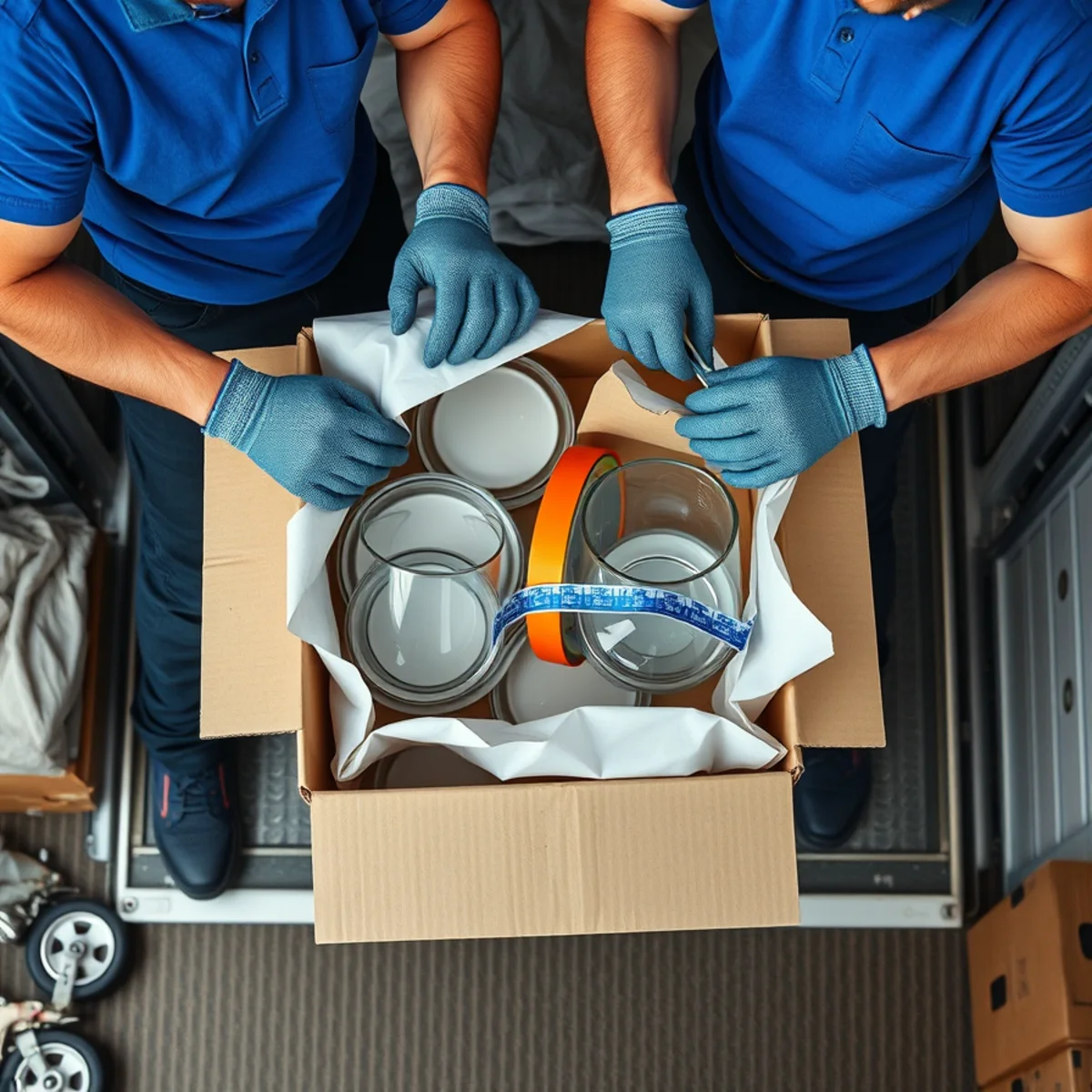
Glassware and stemware break for one reason: nothing is between the pieces when the box shifts. On a Chicago move that box gets handled more than you think, carried down a back staircase, set on a dolly, ridden up a freight elevator, and slid into a truck that takes Lake Shore Drive's expansion joints at speed. Cushion every piece individually.
Use clean packing paper, not newspaper. Newsprint ink rubs off on glass and dishes and you will be washing everything before you can use it. Wrap each glass on its own, then nest a second wrap around pairs. Stand glasses upright in the box like soldiers rather than laying them flat, and crumple paper into every gap so nothing can rattle. Plates travel better on their edge, vertical, with paper between each one.
Fill the top and bottom of the box with a paper cushion and label it FRAGILE on more than one side so our crew knows to keep it off the bottom of the stack. If you have a lot of stemware, ask us about boxes with cell dividers when we put together your quote.
Pack boxes full, but not overpacked
A box that is too full or too empty is the box that fails. Half-empty boxes collapse when something heavy goes on top of them in the truck, and bulging, overpacked boxes split at the seams or refuse to stack flat. Either one slows a crew down and puts your things at risk on the dolly.
Aim to fill each box to the top, then top off any space with packing paper or soft items like towels and linens so the contents do not move. When you close the lid it should sit flat with no dome and no caving in. Give it a gentle shake; if you hear shifting, add more cushion. A properly filled box keeps its shape, stacks square, and protects whatever is inside it.
This matters more in city buildings than people expect. Boxes that stack flat ride a hand truck cleanly down a narrow greystone staircase and load tight against the truck wall so nothing tips on the drive.
Pack an Open First box for the first night
The last truth of every move: the one thing you need is always in the last box you find. Beat it by packing a clearly marked Open First box for each person in the household and loading it last so it comes off the truck first.
Think about the first night and the first morning in the new place. Phone chargers, a few days of medications, toilet paper, hand soap, paper towels, a box cutter, basic tools, snacks, a change of clothes, pet food and a bowl, bedding, and the coffee setup. Write OPEN FIRST in large letters on the top and at least two sides so it is easy to spot in a stack.
Tell your crew this box rides last and gets set down where you can reach it. We are glad to keep it up front and put it in the room you point to first.
Label every box by room
Labeling is the cheapest insurance on moving day. A box marked only KITCHEN STUFF ends up in a hallway pile that you sort through for a week. A box marked with its destination room goes straight there, and on a busy day in a tight building that saves real time and real steps.
Write the room name in large letters on the top and on two sides, since the top disappears the moment boxes are stacked. Add a short note of what is inside, like KITCHEN PANS or BEDROOM 2 BOOKS, so you can find one thing without opening five boxes. Color-coded tape or a marker dot per room works well too, especially if more than one person is helping carry.
If your new place has rooms that are not obvious from the doorway, write the room name on a sheet of paper and tape it to each door. Our crew reads the door, reads the box, and your things land in the right spot the first time, no questions up and down the stairs.
Heavy items go in small boxes
Books, records, canned goods, tools, and tile feel fine until they are stacked into a big box, and then that box becomes something nobody should lift. A large box full of books is a back injury and a blowout seam waiting to happen, and it slows the whole move down on a walk-up.
Put dense, heavy things in small boxes and save the large boxes for light and bulky items like pillows, comforters, lampshades, and winter coats. A small box of books is a clean two-handed lift that rides a hand truck easily down a back staircase. A large box of books is a problem on every floor.
Spread the weight across more small boxes rather than maxing out a few. It is faster to carry, safer for everyone, and easier to stack square in the truck so nothing crushes the load underneath.
Use wardrobe boxes for hanging clothes
Hanging clothes do not belong in trash bags. They wrinkle, they slide off the hangers, and they turn into a laundry day you did not plan for. Wardrobe boxes have a built-in bar so your clothes travel hung up exactly as they are in the closet.
Move clothes straight from the closet rod to the wardrobe box bar without unhanging them, then close the lid. At the new place you lift them right back onto the rod. Coats, suits, dresses, and anything that creases stay ready to wear. You can tuck shoes, belts, and soft items in the bottom of the box to use the space.
Wardrobe boxes are tall, so they are also a smart way to handle awkward closet items. Ask us to bring the right number when we build your quote; we would rather show up with a few extra than leave you stuffing a duffel bag at the last minute.
Photograph your electronics wiring before you unplug
Nobody remembers which cable went where, and the TV, router, sound bar, and game console all use cables that look almost identical. Before you unplug a single thing, take clear photos of the back of each device with your phone so you have a map for reassembly.
Snap the wiring from a couple of angles, then label cords with a piece of tape and a marker, or bag the cables for each device together and tape the bag to the unit. Pack remotes, power bricks, and small accessories in the same labeled bag so nothing wanders off into the bottom of a box.
Original boxes are ideal for TVs and monitors if you saved them. If not, wrap screens well and stand them on edge, never flat, and mark the box FRAGILE and THIS SIDE UP. When you reach the new place, your photos turn setup into a five-minute job instead of a frustrated evening on the floor.
Chicago packing checklist
- Wrap each glass and plate in clean packing paper, not newspaper, and stand glasses upright with paper in every gap
- Fill boxes to the top, cushion the empty space, and make sure the lid sits flat with no rattle
- Put books, records, cans, and tools in small boxes; save large boxes for light, bulky items
- Pack an Open First box per person with chargers, meds, toiletries, snacks, and bedding, and load it last
- Label every box by destination room on the top and two sides, plus a quick note of what is inside
- Move hanging clothes straight into wardrobe boxes so they arrive ready to hang
- Photograph the wiring behind your TV and electronics, then bag and label each device's cables
- Tape a room-name sheet to each door at the new place so the crew can place boxes the first time
- Stand TVs, monitors, and mirrors on edge, never flat, and mark them FRAGILE and THIS SIDE UP
- Keep documents, jewelry, keys, and small valuables with you rather than on the truck