
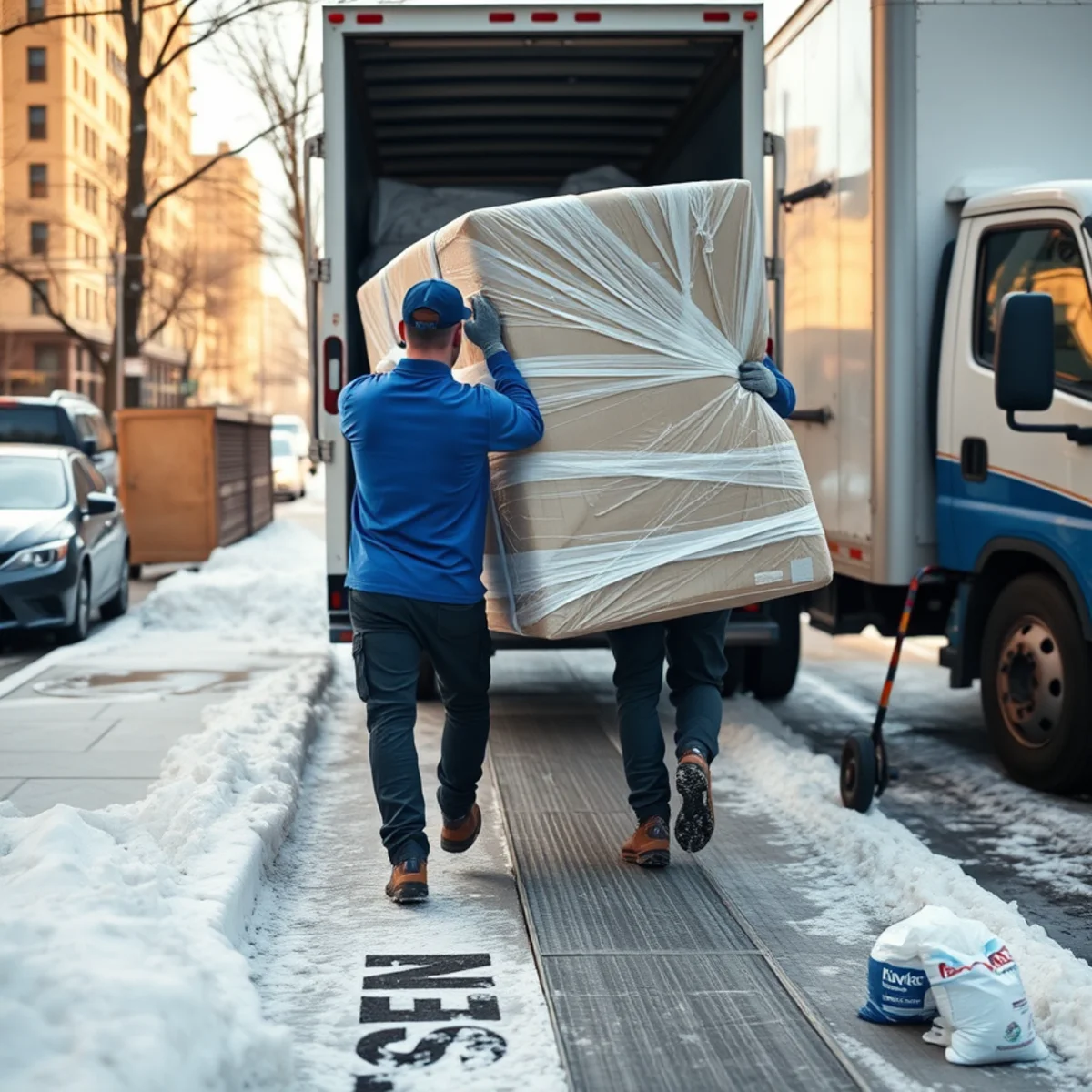
Moving in Chicago between December and March means working with the weather, not against it. Snow piles up overnight, sidewalks ice over, and the sun is gone by 4:30. A winter move can go smoothly, but only if the walkways are clear, the floors are protected, and the schedule has a little give in it. This guide covers what we do, and what you can do, to keep a cold-weather move safe and on time.
Our crews work through Chicago winters every year, so none of this is theory. From greystones in Logan Square to high-rise freight elevators downtown to walk-ups in Rogers Park, the same handful of winter problems show up again and again. Here is how to get ahead of them.
Key Takeaways
- Book your crew early for winter dates and target a mid-month, midweek slot when rates and traffic ease up; first-and-last-of-month weekends fill fastest.
- Lay down floor protection (ram board, runners, towels) at both ends so crews tracking snow, salt, and slush don't ruin your hardwood or new place's floors.
- Shovel and salt the path, alley, and any stairs before we arrive, and reserve a curb or alley spot so the truck isn't double-parked in a snowbank.
- Cold cracks plastic and electronics, so wrap TVs, screens, and breakables well and let temperature-sensitive items warm up before powering them on.
- Winter weather can slow loading and the drive, so plan a little extra time, keep walkways clear all day, and book your building's freight elevator and COI ahead.
Clear the snow and ice before the crew arrives
The single biggest factor in a safe winter move is footing. A wet box is replaceable. A crew member or a family member who slips on an icy step is not. If your walkway, stairs, and driveway are clear and dry when we pull up, loading goes faster and everyone stays on their feet.
Shovel down to the pavement the morning of your move, not the night before, because anything cleared at 9 p.m. refreezes by dawn. Pay special attention to the spots that carry the most weight: the front steps, the threshold, the stretch from the door to the truck, and the lip of the loading dock or alley apron. Greystone and three-flat stairs are the usual trouble spots, since they hold ice in the corners and under the railings where a shovel misses.
If snow is still falling, clear a path and keep a shovel by the door so we can knock it back down between loads. A clear, well-lit lane from your door to the truck is worth more than any single packing tip in February.
De-ice walkways and keep the salt working
Shoveling gets the snow off. Salt or ice melt keeps the refreeze from sneaking back. Put down a generous layer of de-icer on every walking surface the night before and again in the morning, then add more once the path is shoveled clean. Concentrate it on steps and any sloped approach to the truck, because that is where a loaded mover is most likely to lose traction.
Standard rock salt stops working when it gets very cold, roughly into the single digits and below, so on a brutal Chicago morning reach for a calcium chloride blend that stays effective at lower temperatures. Keep a small bucket of ice melt near the door during the move and have someone re-treat any patch that starts to glaze over. A handful of sand or cat litter on a stubborn icy spot adds grip when melt alone is not enough.
Protect your floors from salt, slush, and water
Here is the trade-off nobody warns you about: the salt and slush that keep you safe outside will wreck your floors inside. Wet boots and dollies track a gray, gritty mess across hardwood, and salt residue can dull and stain a finish if it sits. The fix is to cover the path before the first box moves.
We bring floor runners and lay protection along the main traffic lanes, but you can help the cause. Put a heavy-duty mat or old towels just inside every entry door so boots and wheels get wiped at the threshold. For a longer haul across finished floors, runners or rosin paper down the hallway keep grit off the wood. Carpet gets the same treatment with adhesive film or runners so slush does not grind in.
Keep a stack of old towels handy to wipe down the dolly wheels and the bottoms of larger pieces as they come inside. Two minutes of wiping saves an afternoon of mopping later, and it keeps your new place looking like you actually wanted to live there.
Shield electronics and cold-sensitive items
Cold is hard on electronics, and the real danger is condensation. When a frozen TV, computer, or speaker comes off a cold truck into a warm room, moisture can form inside the housing, and powering it up too soon risks a short. The rule is simple: let cold electronics warm up to room temperature before you plug anything in, ideally several hours, and overnight is safer for big-screen TVs.
Pack electronics in their original boxes when you can, or wrap them well and pad them, since cold plastic and screens get brittle and crack more easily than they do in summer. The same caution applies to anything that can freeze or shatter in the cold: houseplants, candles, liquids, vinyl records, and musical instruments all do better riding in a heated car than in the back of the truck. If something truly cannot take the cold, set it aside and move it yourself in the cab.
Plan around plows, parking, and the loading zone
A move can stall before it starts if the truck has nowhere to land. After a snowfall, plows pile snow against the curb exactly where you need to stage the truck, and on a tight residential block that can mean no room at all. Walk your street the morning of the move and clear out a truck-length space near the entrance if you can, including the windrow the plow left behind.
Chicago has its own winter parking wrinkles. The two-inch snow ban shuts down parking on roughly 500 miles of main streets the moment two inches falls, regardless of the date, and the overnight winter overnight ban runs December 1 through April 1 on other arterials whether it snows or not. Keep the truck and your cars off those routes so nothing gets ticketed or towed mid-move. If you are in a high-rise or a building with an alley and a freight elevator, reserve the elevator and the dock early and ask about a heated loading area, since downtown docks fill up fast in winter.
Plan the parking and access details when you book, not the morning of. Tell us about your alley, your dock, the freight elevator hours, and any building COI requirements up front, and we will sort the certificate of insurance and timing before the truck rolls.
Beat the short daylight and dress for the work
In deep winter, Chicago loses the sun before 4:30 in the afternoon, so a move that starts late can finish in the dark and the cold. Book an early start. A morning slot gives you the most daylight, the best footing before the afternoon refreeze, and time to handle the unexpected without working under headlamps. If the load is large, an early start is the difference between finishing in daylight and fumbling boxes down icy stairs at dusk.
Dress everyone for moving in the cold, not for standing around in it. Layers you can shed, waterproof gloves with grip, a warm hat, and above all boots with real tread on a non-slip sole. Moving warms you up fast, so something you can unzip beats one heavy coat. Keep the heat on at both the old place and the new one, set out a thermos of something hot, and have a dry towel by the door. A crew that is warm and sure-footed works faster and safer, and that is the whole point.
Chicago Winter Moving Day Checklist
- Shovel walkways, steps, and the driveway down to the pavement the morning of the move, not the night before
- Salt or de-ice every walking surface the night before and again in the morning, using a calcium chloride blend on very cold days
- Clear a truck-length parking space at the curb and knock back any windrow the plow left behind
- Check the two-inch snow ban and the December 1 to April 1 overnight ban so the truck and cars do not get towed
- Lay mats at every entry door and runners along finished floors to catch salt, slush, and grit
- Keep a stack of old towels handy to wipe dolly wheels and furniture as items come inside
- Pack electronics well and let them warm to room temperature before plugging them in, overnight for big TVs
- Move plants, candles, liquids, records, and instruments in a heated car rather than the cold truck
- Book an early start so loading and unloading finish in daylight, before the afternoon refreeze
- Dress in layers with waterproof grip gloves and non-slip boots, and keep the heat on at both homes
- Confirm freight elevator, loading dock, alley access, and any building COI requirements ahead of time
- Have a backup date in mind in case a major storm makes the roads or walkways unsafe